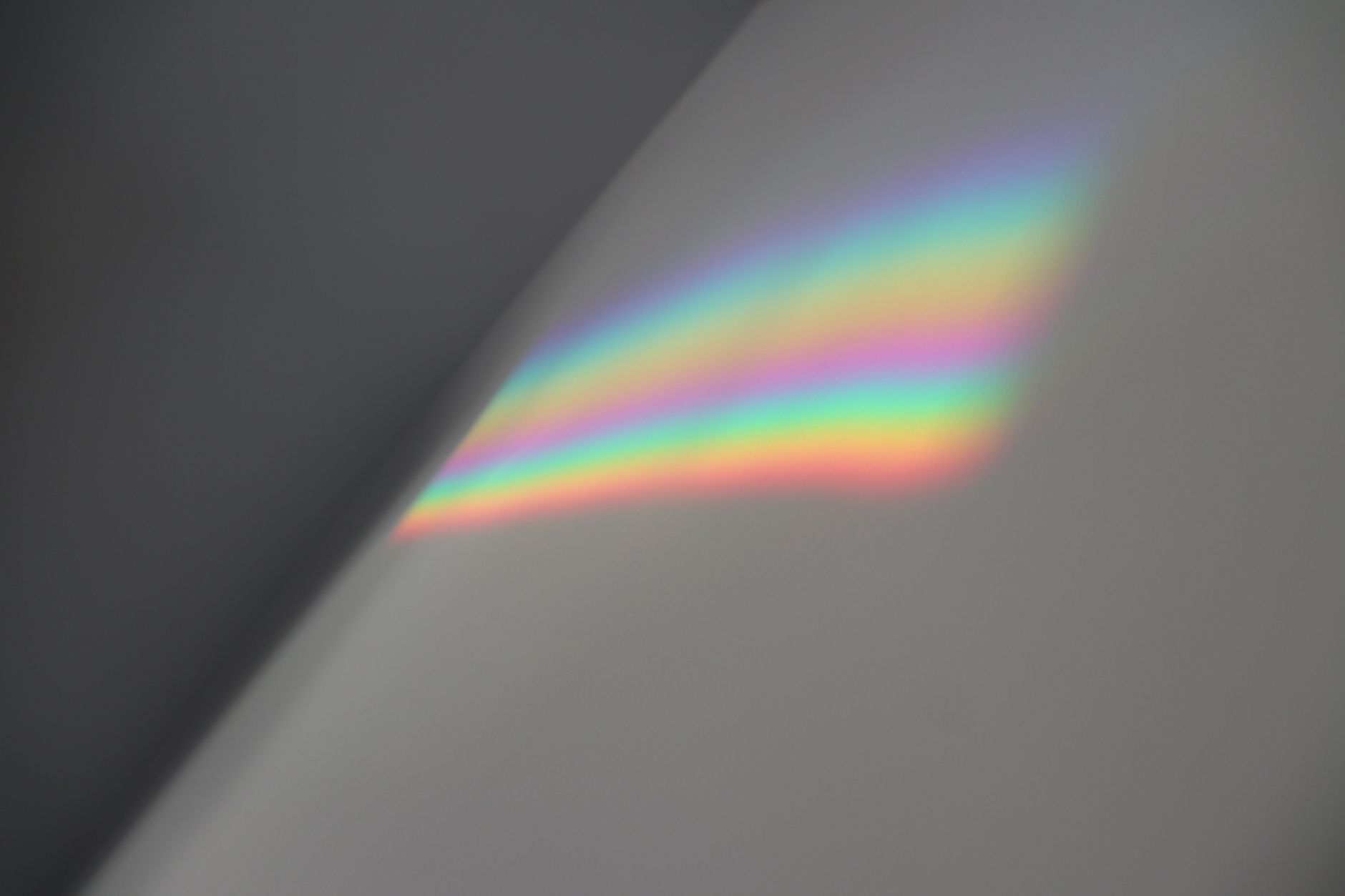
Rainbow factory is one of those titles that does double duty. It names something industrial and man-made, then immediately points you back toward the source that factories have always borrowed from: the natural world itself. The GreenWay Art Prize presents Rainbow factory as a work that sits inside this tension, asking what it means to manufacture wonder when nature has been producing it for free all along. Colour, light, and ecological feeling converge in a single image.
What the title is really saying
The word "factory" carries weight. It suggests scale, repetition, and process. A rainbow, by contrast, is unrepeatable. It appears once in a particular sky, at a particular angle, for a particular observer, and then it's gone. Placing those two words together is a small act of ecological wit. The work asks whether we've become so accustomed to manufactured spectacle that we've stopped noticing the spectacle that requires no manufacture at all.
It's a question other works in the GreenWay Art Prize have circled differently. Overcast finds ecological meaning in the least dramatic light imaginable: a grey sky that most people ignore. Rainbow factory works from the opposite direction, starting with something so visually loud it risks being dismissed as decoration, then asking the viewer to stay a little longer with it.
Colour as ecological subject matter
In ecological art, colour is rarely just colour. Pigment in a flower has a function. The iridescence of a beetle's wing is a survival strategy. The banding in a rainbow corresponds to actual physics: wavelengths of light refracted through water droplets, each nanometre range landing at a precise angle. None of it is arbitrary.
Rainbow factory treats this seriousness as its starting point. The work doesn't aestheticise nature as a backdrop for human feeling. It works more carefully than that, attending to colour the way a botanist attends to a specimen: with curiosity about how the thing actually works, not just how it looks. The light and shade on the GreenWay paintings 1-6 series covers similar territory in its sustained attention to how the ecological corridor changes as illumination shifts across a day. Both works argue that light is not a given; it's a subject.
The GreenWay Art Prize and ecological attention
The GreenWay Art Prize supports artists who take the ecological world seriously as both subject and method. Works in the prize range from botanically precise studies of specific species to broader meditations on urban corridors, waterways, and the way human infrastructure shapes the natural world. Rainbow factory fits into this context as a work about perception itself: about what we see when we look at nature, and what we miss when we look too quickly.
That attentiveness is a recurring concern across the prize. Rainbow factory earns its place by making the most common optical phenomenon in the sky feel newly strange. A rainbow is, when you think about it, a factory: sunlight enters, water acts on it, and a spectrum emerges on a reliable schedule. The work invites you to think about that process rather than simply receive the result.
Why this work belongs in an ecological art prize
Some artists in the GreenWay Art Prize work from grief. Others work from wonder. Rainbow factory sits closer to wonder, but it doesn't let wonder become complacency. The title's irony keeps a small hook in the viewer's attention. You admire the colour and then you catch the factory, and then you're thinking about what it costs to replicate something that nature does for nothing.
That's a useful place to sit. Ecological art at its best doesn't tell you what to think; it puts you somewhere productive and lets you think it. Rainbow factory does exactly that: it starts with one of the most beloved natural phenomena on earth and holds it up until you see something in it you hadn't expected.